

Last week we talked about rebooting commitment to better self-care. Before I go on, let me introduce the new ‘voice’ you may have noticed in my blog. My great friend, web-weaver, assistant, and all-round cohort, Julia, has agreed to be my guest blogger. We discuss and combine our thoughts and experiences to hopefully bring a more well-rounded approach to our subject matter.
This week, we would like to talk about cravings. From personal experience, I believe there is a sense a deep deprivation associated with food cravings and often food is used to provide comfort, reward or to fill emotional needs. The root causes of the food cravings come from intertwined factors of social, cultural, biological and psychological issues. It is a big subject, and there are many theories as to why we crave what we crave. Therefore, it is helpful to look from a holistic approach.
Let’s begin with a biological view.
Cravings, like any chronic physical ailment, are really our body trying to get us to pay attention, and they will eventually bring us to our knees. Craving can be seen as an overwhelming emotional and biological experience that takes over our body and produces unique behaviors – similar to wanting and seeking a drug. Sugar is highly addictive. A number of studies have found that sugar affects the brain in the same ways that addictive substances such as nicotine, cocaine, and morphine.
Once we have imprinted our brain with an association of pleasure and the addictive sweet or salty indulgence, we have landed ourselves on a path of reoccurring cravings that can lead to addictions. These connections are hard-wired into our brains and affect the hippocampus, the part of the brain that controls impulse.
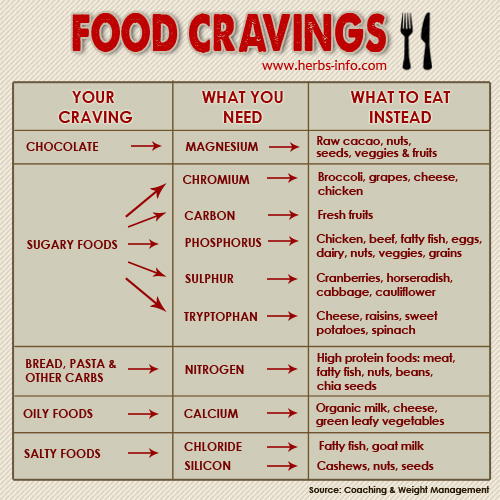
It has been long thought that food cravings were due to the body’s effort to correct nutritional deficiencies. For example,
- Sugar craving can be due to an imbalance of calcium, zinc, chromium, or magnesium deficiency.
- A craving for chocolate may indicate a lack of dopamine, serotonin, or phenylethylamine, a chemical that has been associated with romantic love.
- Sugar craving might also be thyroid issues, yeast infection, adrenaline overload, hormone, or insulin imbalance.
- Craving of salt may be tied to adrenal, kidneys or sodium deficiency.
- Craving a juicy steak might medicate the body’s need for iron or protein, etc.
The task of reprogramming our brain and body will take some hard work, but with an understanding of what is behind those persistent cravings, the job is not impossible with such strategies such as:
- Control blood sugar: Unstable blood sugar underlies many of the symptoms that autoimmune patients cope with, including exhaustion, insomnia, anxiety, depression, and brain fog. Many people with blood sugar problems end up with depression and impaired brain function due to an inflammatory cascade that occurs when blood sugar drops and spikes too often.
- Regulate hormones. In women, just before our period when estrogen is low and progesterone is on its way down, levels of feel-good beta-endorphins in our brain bottom out. This hormonal imbalance can cause intense sugar cravings for women in perimenopause or with PMS as our body attempts to boost serotonin and endorphins. Hormones are directly affected by our blood sugar levels. When the cell membrane is inflamed, hormones cannot communicate with the receptor to get the message into the cell where it needs to go for normal function. Simply put, the cell cannot “hear” the message from the hormone insulin to bring the glucose needed for energy into the cell. As a result, glucose builds up in the blood leading to elevated blood sugar levels and more inflammation. This is the state of hormone resistance, or in the case of diabetes, insulin resistance.
Here are a few food/diet strategies to balance blood sugar metabolism
- Eat a breakfast of high-quality protein and fats with low sugars and starches.
- Include some fiber, fat, or protein when choosing high sugar foods. These added factors slow down the rate at which glucose is absorbed into the bloodstream and help prevent insulin surges.
- Rely first on high-protein, low carb, healthy-fat lunch, and snack items before caffeine and sugary snacks to get you through your workday.
- Avoid sweets or starchy foods before bed. Your blood sugar will crash during the night and chances are your adrenals will kick into action, creating that dreaded 3 a.m. wake-up.
- Dilute fruit juices and carrot juice. These can as sugary as soda, and will quickly have your blood sugar crashing.
- Minimize grain and refined carbohydrate consumption.
- Eat a well-balanced diet consisting mostly of vegetables, quality meats, with plenty of fiber and good fats.
- Recognize bad habits. Have an alternative the moment you get a craving; it could be doing 10 jumping jacks, drinking a glass of water, or yawn, rotate your eyes clockwise and counter-clockwise and tap gently on either side of your liver and spleen area. This is a powerful tip to keep cravings at bay.
Nutrients to support blood sugar balance
Dietary habits are the most important and effective ways to stabilize blood sugar. In addition, certain nutrients can help as well. While there are many supplements, herbs, and nutrients to choose from, every body has specific needs, so be sure to consult your physician or use muscle testing if you know how to find your own best remedy.
- Chromium
- Bovine adrenal, liver or pancreas glandular
- Choline bitartrate
- Inositol
- L-carnitine
- CoQ10
- Rubidium chelate
- Vanadium aspartate
The deeper solution is to address cravings for what they truly are– a cry for help. A cry for us to find out what’s really up and BE with that. In part II we will look at the essence of craving from a psychological, emotional point of view.

 Dr. Alvita Soleil
YES!! Eating the right foods is so important! 🙂 it also makes you feel great!